Get your firm's data AI-ready.
What your firm knows sits in two places. Much of it is in people's heads and was never written down. What is written down is unstructured, so AI can't use it. Without context and verification, you get generic output at best and hallucinations at worst.
Legal Engine captures what isn't written down, maps what is, and verifies both.
You choose what we see. We map it.
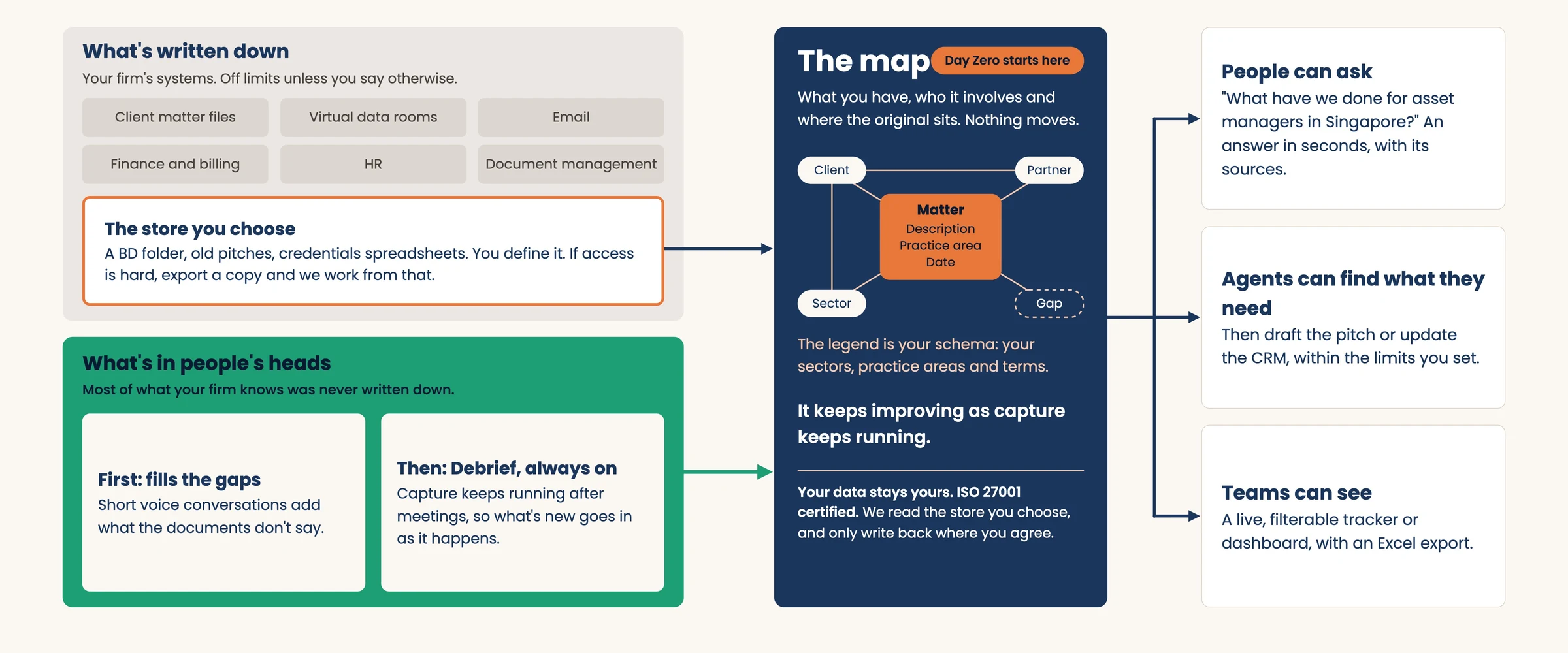
Your firm's systems are off limits unless you say otherwise. We take the store you choose and what's in people's heads, and put a map on top. Your data stays yours.
Four things make it work.
The map
What you have, who it involves and where the original sits, in your own sectors, practice areas and terms. Nothing moves.
Voice
Short conversations add what the documents don't say. The agent starts from the map, so it only asks about what it can't find somewhere else.
Verification
Every claim the agent makes traces back to its source.
Workflows and feedback loops
Every interaction has to be useful for the person, not just the firm. That's how you get adoption, and how the map keeps improving.
Build what you need, on what your firm already knows.
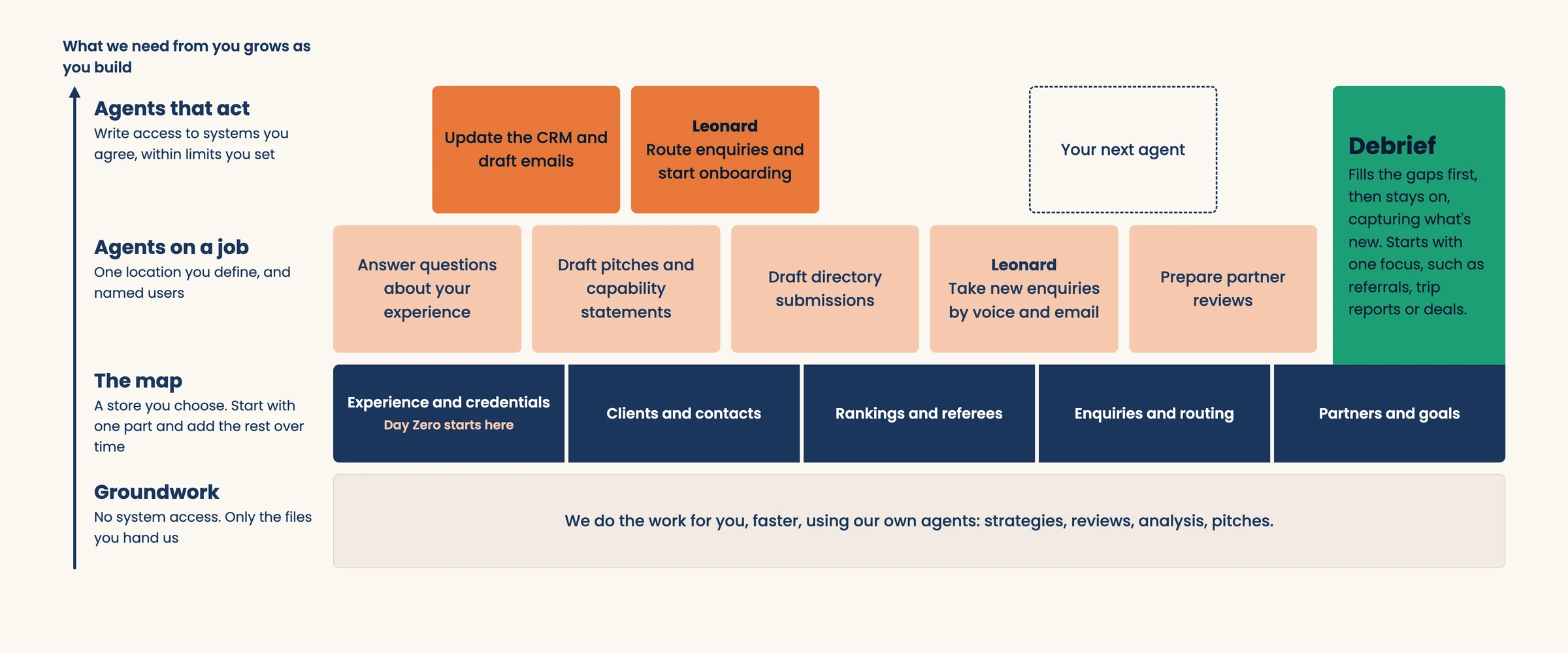
No two firms end up the same shape. Start wherever you are.